
Cannabis Education
Endocannabinoid System
Cannabinoid Receptors
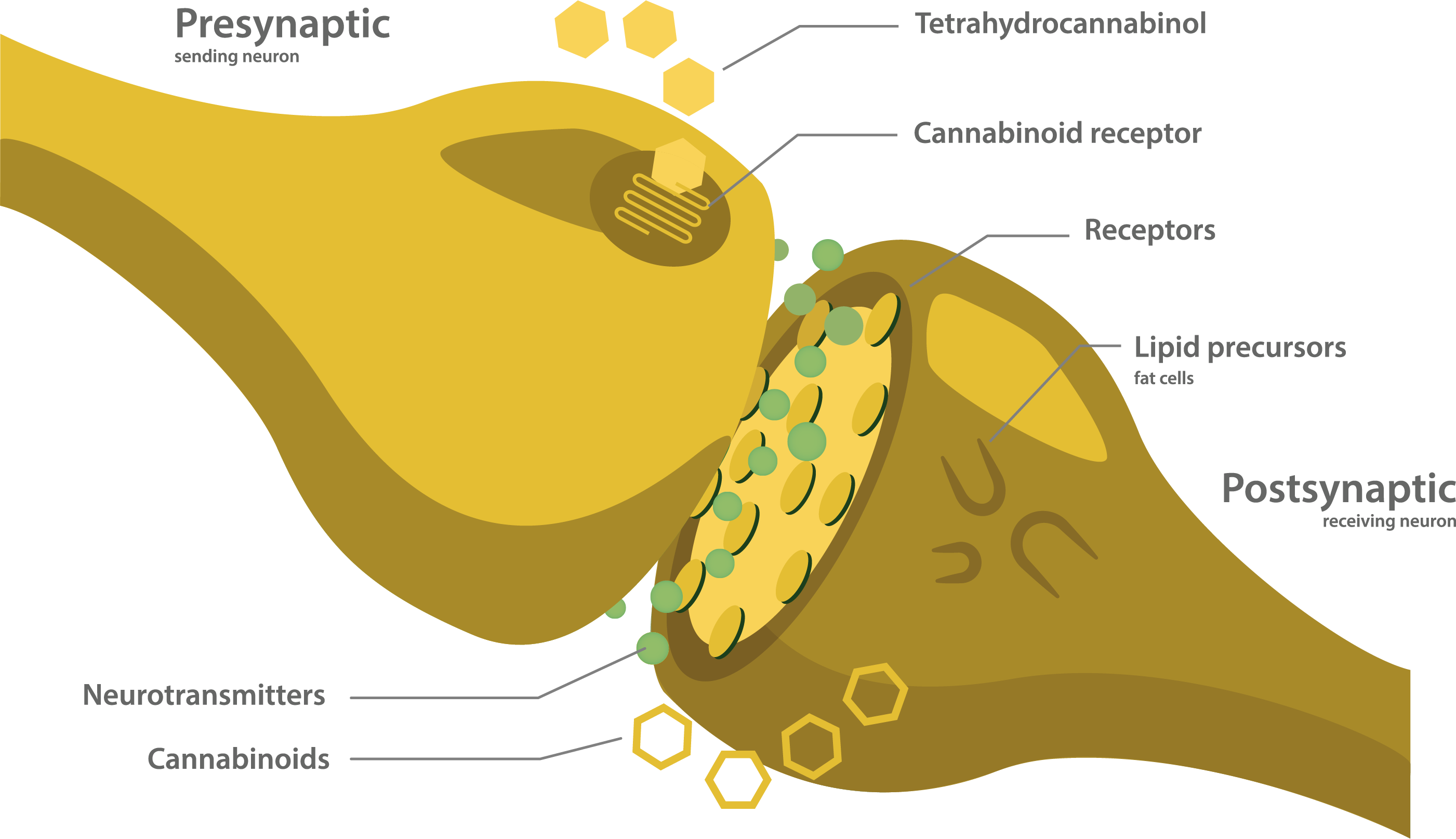
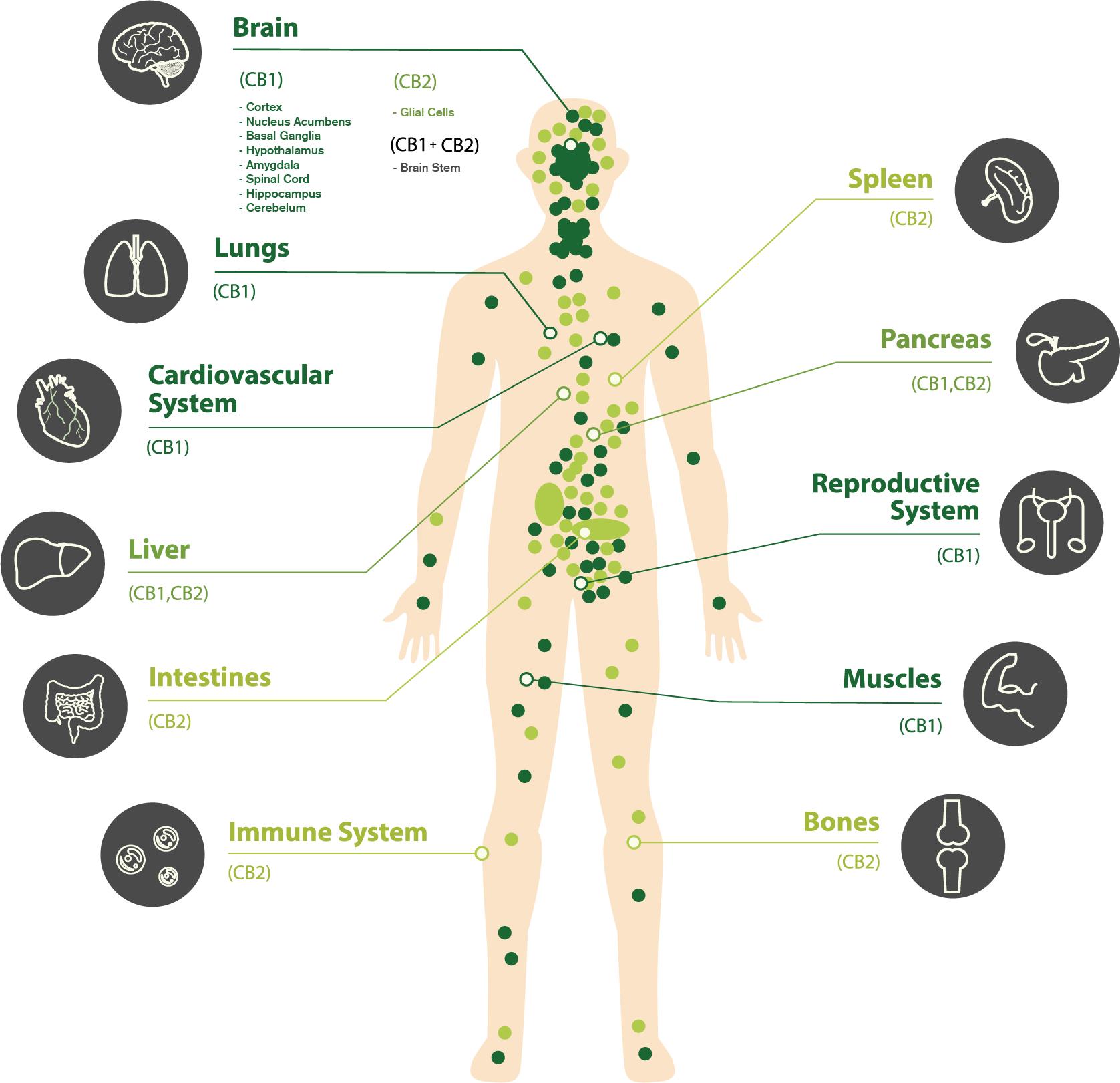
The two main cannabinoid receptors are called “Cannabinoid Type 1” and “Cannabinoid Type 2” receptors (CB1 & CB2). Both can be found in the same location within the body such as the neurological system but at varying concentrations.
CB1
Found primarily in the brain (hippocampus, cerebellum), and also throughout the body. Not found in the brain stem, which explains why cannabis doesn’t suppress vital respiratory functions. Involved in pain, appetite, and cognition.
CB2
Located in the immune system and peripheral tissues (cardiovascular, liver, fat, bone). Regulates immune cell migration and cytokine production. Also plays a role in pain perception.
Endocannabinoid System

Is a system...
that resides inside all mammals which helps regulate physiological and cognitive processes in order to maintain homeostasis, or in other words, to remain in balance.
Two Endocannabinoids
The two most prolific and well-researched naturally occurring endogenous compounds are termed anandamide (AEA or N-arachidonoyl-ethanolamine), also known as the “bliss” molecule, and 2-AG (2-arachidonoylglycerol). They are specifically derived from arachidonic acid.
The Relevance of This System
It is important to understand this system as it can potentially help us to understand how to maintain balance and how to remain in optimal health. Using cannabis products is just one tool for this goal. Cannabis products contain phytochemicals other than cannabinoids, like terpenes and flavonoids, which can help a deficient or hyperactive ECS.
What is the Endocannabinoid System?
This text describes the Endocannabinoid explainer video that would be published here when it is ready.
Nature’s Internal Regulators
The endocannabinoid system (ECS) is a vital network in the body that helps maintain balance. It regulates mood, appetite, pain, and immune responses. Endocannabinoids are natural molecules that bind to receptors to support this harmony.
The EndoCannabinoid System
The endocannabinoid system (ECS) is an innate system that resides inside all mammals which helps regulate physiological and cognitive process.
Cannabinoids vs. Cannabimimetic Compounds
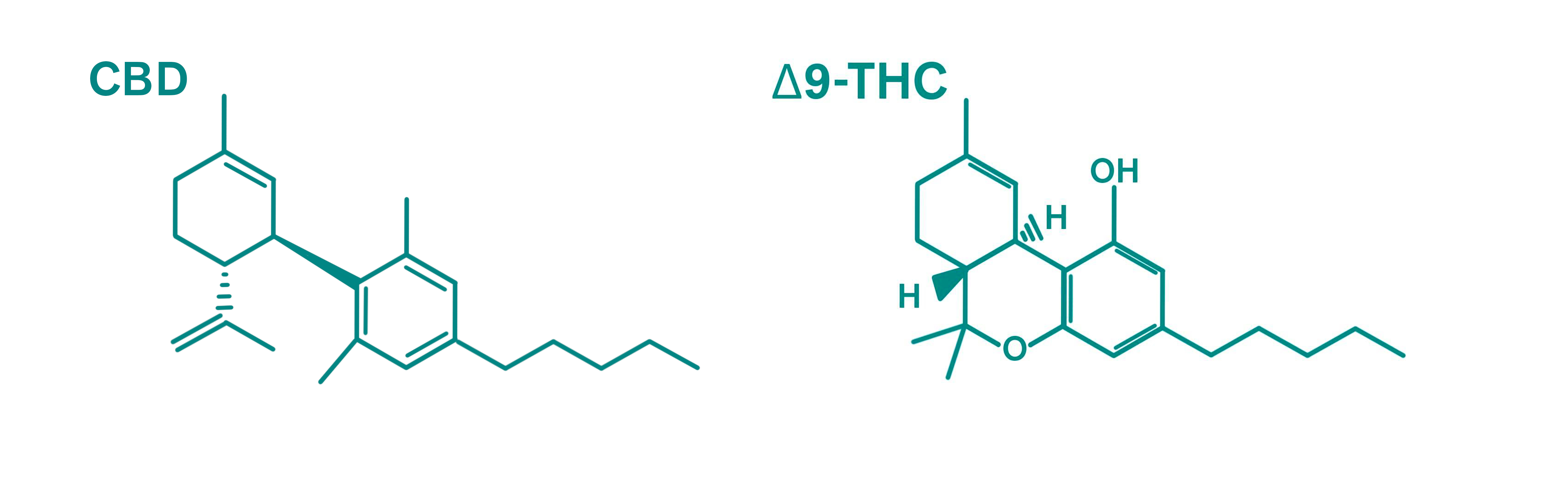
Cannabinoids are compounds found primarily in the cannabis plant that are able to affect components of the endocannabinoid system
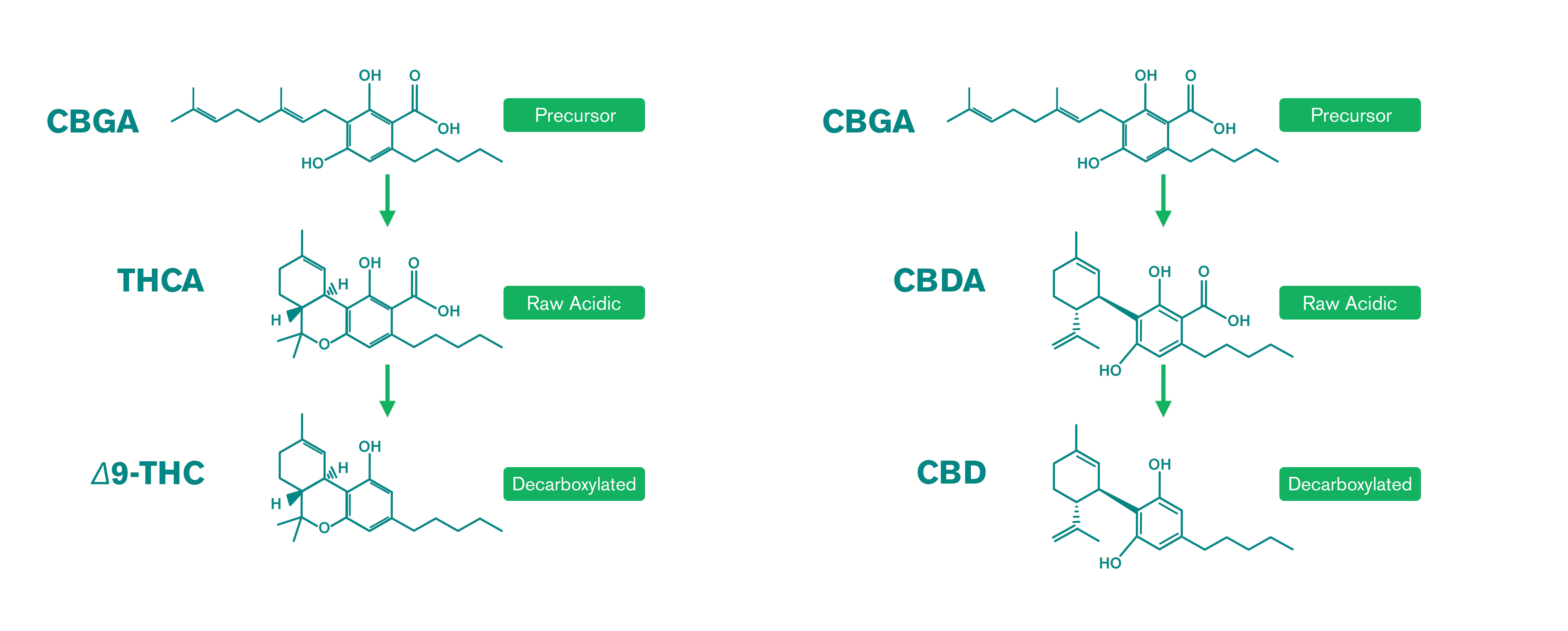
Cannabinoids 101
Cannabinoids, or phytocannabinoids, are chemical compounds found in cannabis plants.