Agarwood Adulteration
May 10, 2024 📙 2 min read
Agarwood oil—often referred to as oud—is among the most complex and chemically diverse essential oils in the world. Its rarity, high market value, and intricate aroma profile make it one of the most frequently adulterated oils in global trade. Authentic, unadulterated agarwood oil is exceptionally scarce.
Several naturally occurring components found in agarwood oil are commercially available as isolated materials, including benzyl alcohol and benzyl acetone. These compounds, along with solvents such as dipropylene glycol (DPG), are commonly used to dilute or extend genuine oud oils. The ready availability of these materials significantly lowers the barrier to adulteration.
Agarwood oils are rich in sesquiterpenes, which means heavier essential oils—such as cedarwood or vetiver—are also sometimes blended in to mimic depth and longevity. Additionally, agarwood contains naturally occurring fatty acids, making cooking oils one of the most common adulterants. Because some fatty acids are genuinely present, distinguishing natural composition from added carrier oils can be challenging.
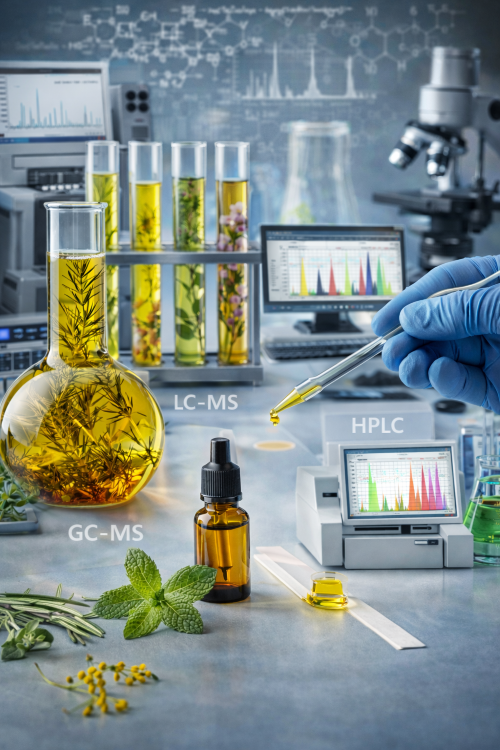
These characteristics make agarwood particularly difficult to authenticate. Comprehensive GC–MS analysis is required to assess purity, but even advanced testing must be interpreted carefully due to natural variability, overlapping compounds, and differences in consistency. As with other high-value oils, repeat testing and experienced interpretation are essential for accurate authentication.