Cinnamomum zeylanicum
Feb 28, 2024 📙 2 min read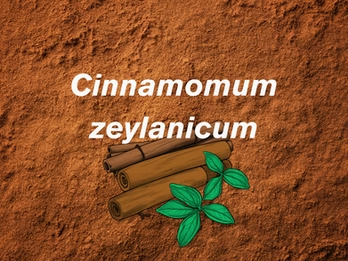
True cinnamon comes from the bark of the Cinnamomum zeylanicum tree. It has been used for centuries—from mummification in ancient Egypt to various religious ceremonies—and was so valued it was once considered a gift fit for monarchs. Because of its worth, spice traders kept cinnamon’s true origin secret for generations. In Greece and Rome, some accounts even claimed cinnamon came from the nests of “cinnamon birds” that gathered bark from faraway, unknown lands.
Cinnamon trade surged among European nations in the 16th and 17th centuries, celebrated for its warmth, aroma, and versatility. Today it remains a staple in the culinary, fragrance, and essential oil industries. That popularity also makes cinnamon a frequent target for adulteration.
Cassia (Cinnamomum cassia) is often marketed as “true cinnamon,” or blended as a base with added synthetic compounds. Because cinnamon is a “hot” oil that may cause skin sensitivity, it’s commonly diluted with coconut oil for topical use—but some suppliers may add carrier oils as adulterants to increase volume. Cinnamon essential oil is traditionally distilled from bark; however, cinnamon leaf material may also be used to dilute or alter the finished product.
Testing remains essential for this essential oil to ensure purity and consistency.
Sources
- Braudel, Fernand. The Perspective of the World: Civilization and Capitalism, 15th–18th Century. Vol. 3. University of California Press, 1984, p. 15. ISBN 978-0-520-08116-1.
- Burlando, B., Verotta, L., Cornara, L., and Bottini-Massa, E. Herbal Principles in Cosmetics: Properties and Mechanisms of Action. Boca Raton: CRC Press, 2010, p. 121. ISBN 978-1-4398-1214-3.
- Herodotus. Histories, Book 3, sections 3.107–113. In: Wheeler, James Talboys. An Analysis and Summary of Herodotus. London: H. G. Bohn, 1852, p. 110. Retrieved 9 January 2019.
- Mallari, Francisco. “The Mindanao Cinnamon.” Philippine Quarterly of Culture & Society 2, no. 4 (December 1974): 190–194. JSTOR 29791158.
- Mohammadifar, Shamameh. “The Origin, History and Trade Route of Cinnamon.” Journal for the History of Science 8, no. 1 (23 August 2010): 37–51. ISSN 1735-0573.